

 Nederlands
 English
 Deutsch
Onze boeken
Berlin: Biography of a City
Door Barney White-Spunner
Categorie | Geschiedenis Europa |
|---|---|
Boeknummer | #421219-YE8 |
Titel | Berlin: Biography of a City |
Auteur | White-Spunner, Barney |
Boektype | Paperback |
Uitgeverij | London : Simon & Schuster |
Jaar van uitgave | 2020 |
ISBN10 | 1471181545 |
ISBN13 | 9781471181542 |
Taal | Engels |
Beschrijving | Paperback, some illustrations (including photographs) in colour and b/w, 8vo. |
Samenvatting | There is a particular frisson about Berlin, a combination of excitement, anticipation, nervousness and the unexpected. Through all its life it has been a city of tensions. Its position, on the frontier of Europe, on the 'Mark', where Christianity met paganism, where the Huns met the Slavs, where Europe met Russia and where fertile land met the sands, swamp and forests of Pomerania and Prussia, gave Berlin a geographical tension. It was also long a city of religious tension, between a largely Lutheran people and a Calvinist government. In the nineteenth-century political tension became acute between a city that was increasingly democratic, home to Marx and Hegel, and one of the most autocratic regimes in Europe. Artistic tension, between free thinking and liberal movements, once championed ... (Lees verder)by monarchs like Frederick the Great, started to find themselves in direct contention with the formal, some would say stultifying, official culture. Underlying all this was the ethnic tension, between multi-racial Berliners and the Prussians; Berlin may have been the capital of Prussia but it was never a Prussian city. Then there is war. Few European cities have suffered from war as Berlin has. It has been sacked by the Hapsburg armies and the Swedes in the 30 Years War; by the Austrians and the Russians in the eighteenth century; by the French, with great violence, for nearly eight years in the early nineteenth century; by the Russians again in 1945 and subsequently occupied, more benignly, by the Allied Powers from 1945 until 1994. Nor can many cities boast such a diverse and controversial number of international figures. Apart from the Electors, Kings and Kaisers, several of whom like The Great Elector and Frederick the Great are deservedly international figures in their own right, with accompanying statesmen like Bismarck, a cast that boasts Schinkel and Gropius; Hegel and Marx; Mahler and Hoffman; Dietrich and Bowie; Lieberman and Köllwitz; Isherwood, Brecht, Wolf and Mann gives Berlin a cultural history that is as varied as it was ground-breaking. In the story of Berlin also lies at least part of the answer to one of the greatest enigmas of the twentieth century. How could a people as civilised, ordered and religious as the Germans support first a Kaiser and then the Nazis in inflicting such misery on Europe? Berlin was never as supportive of the Kaiser in 1914 as the rest of Germany; it was the revolution in Berlin in 1918 that lead to his abdication and Germany suing for peace. Nor was it as supportive of Hitler, being home to much of the opposition to the Nazis, although paradoxically Berlin suffered more than any other German city from Hitler's war. In unwrapping the story of Berlin it is possible to find at least a partial answer to this puzzling question which lies partially in the unique, curiously un-Germanic tradition of its capital city. |
Pagina's | 544 |
Conditie | Goed — Foxxing top right corner on cut. |
Prijs | € 15,00 |
 Toevoegen aan winkelwagen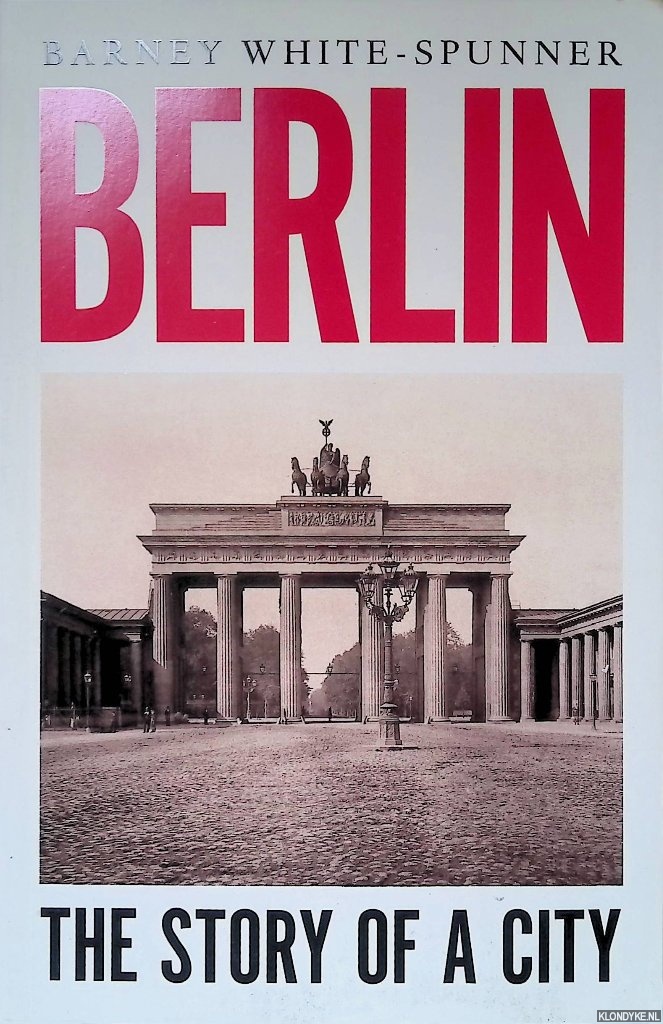
Zie ook










Onze gebruikte boeken verkeren in goede tweedehands staat, tenzij hierboven anders beschreven. Kleine onvolkomenheden zijn niet altijd vermeld.