

 Nederlands
 English
 Deutsch
Onze boeken
Portraits of a People: Picturing African Americans in the Nineteenth Century
Door Gwendolyn DuBois Shaw e.a.
Categorie | Geschiedenis Noord-Amerika |
|---|---|
Boeknummer | #408999-LB12 |
Titel | Portraits of a People: Picturing African Americans in the Nineteenth Century |
Auteur | DuBois Shaw, Gwendolyn & Emily K. Shubert |
Boektype | Paperback |
Uitgeverij | Seattle/London : University of Washington Press |
Jaar van uitgave | 2006 |
ISBN10 | 0295985712 |
ISBN13 | 9780295985718 |
Taal | Engels |
Beschrijving | Paperback, numerous (full page) illustrations in colour and b/w, 4to. |
Samenvatting | Recently, a number of cutting edge African American artists have investigated issues of race and American identity in their work, relying on the use of historical source material and the subversion of archaic media. This scrutiny of little known, yet uncannily familiar, racialized imagery by contemporary artists has created a renewed interest in the politics of nineteenth-century American art and the role of race in the visual discourse. Portraits of a People looks critically at images made of and by African Americans, extending back to the late 1700s when a portrait of African-born poet Phillis Wheatley was drawn by her friend, the slave Scipio Moorhead. From the American Revolution until the Civil War and on into the Gilded Age, American artists created dynamic images of black sitters. I... (Lees verder)n their effort to create enduring symbols of self-possessed identity, many of these portraits provide a window into cultural stereotypes and practices. For example, while some of these pictures were undoubtedly of distinct, named individuals, many are now known by titles that reference only generalized types, such as Joshua Johnston's painting Portrait of a Man, c. 1805–10, or the silhouette inscribed "Mr. Shaw's blackman," cut around 1802 by the manumitted slave Moses Williams. By the middle of the nineteenth century, photography began to offer black sitters an affordable and accessible way to fashion an individual identity and sometimes obtain financial support, as in the case of the numerous cartes-de-visites produced during the 1860s and '70s that bear the image of the feminist activist Sojourner Truth above the text, "I Sell the Shadow to Support the Substance." Portraits of a People features colour reproductions of over 100 important portraits in various media, ranging from paintings, photographs, and silhouettes to book frontispieces and popular prints. Essays by Gwendolyn DuBois Shaw consider silhouettes and African American identity in the early republic, photography and the black presence in the public sphere after the Civil War, and portrait painting and social fluidity among middle-class African American artists and sitters. This landmark publication will change the way that we view the images of blacks in the nineteenth century. From the American Revolution through the Civil War and on into the Gilded Age, American artists created dynamic images of black sitters. Many of these portraits illuminate the search for a self-possessed identity as well as cultural stereotypes and practices. Portraits of a People looks critically at images made of and by African Americans. They range from a 1773 engraving of the African-born poet Phillis Wheatley purportedly drawn by her friend, the slave Scipio Moorhead, to an 1897 portrait of the artist's mother painted by the expatriate Henry O. Tanner while visiting from Paris. Portraits of a People features color reproductions of more than 100 important portraits in various media, drawn from museum and historical collections across the United States. The biographies of individual sitters, artists, or histories of the works are discussed in short texts. Essays consider various issues of how the self was fashioned pictorially and the development of unique identities through the formal portraiture of freeborn and previously enslaved African American artists and sitters. |
Pagina's | 183 |
Conditie | Als nieuw |
Prijs | € 20,00 |
 Toevoegen aan winkelwagen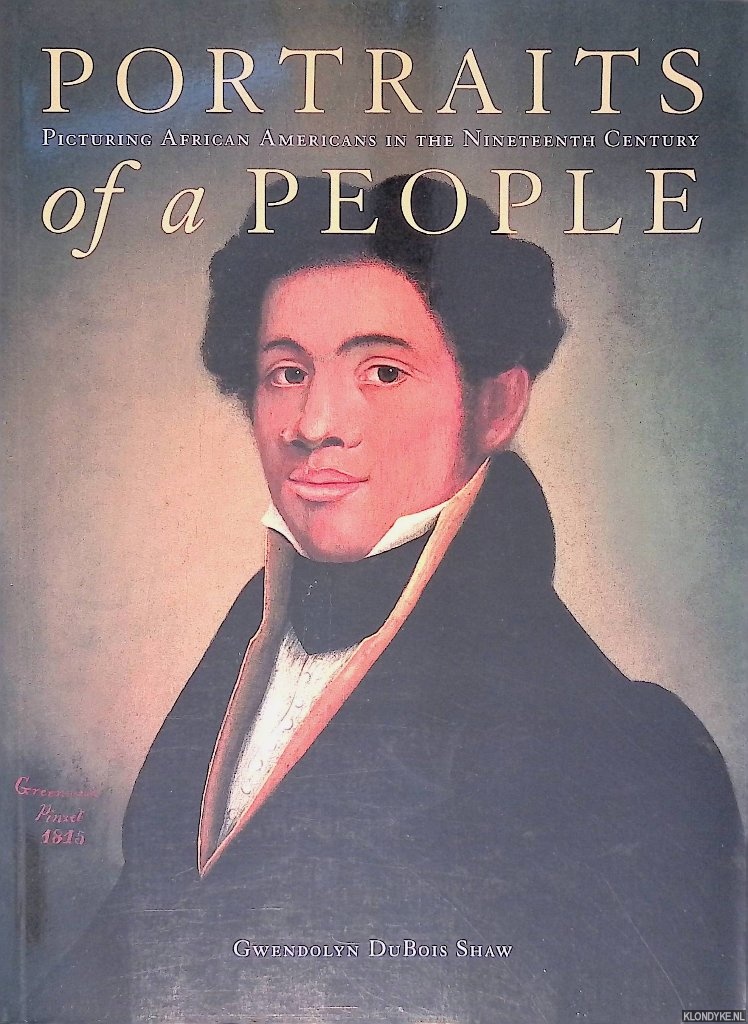
Zie ook










Onze gebruikte boeken verkeren in goede tweedehands staat, tenzij hierboven anders beschreven. Kleine onvolkomenheden zijn niet altijd vermeld.